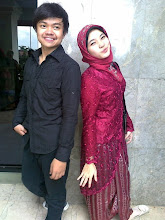
Profil Mahasiswi

Foto saya
Mahasiswi Psychology Y.A.I tahun 2010. This blog as a place of gathering tasks given by my English teacher in order to meet the category of maximum value.

Jumat, 13 April 2012

Cara membuat Hyperlink

1. Klik "NEW POST" pada halaman dashboard


2. Blok tulisan yang ingin di buat hyperlink


3. Lalu copy alamat URL yang ingin di jadikan hyperlink


4. Paste alamat URL pada kolom yang tersedia, klik OK


5. Anda sudah berhasil membuat hyperlink yang di inginkan

Quisioner dengan skala Likert

Hubungan keluarga dengan Prestasi Belajar

1. Orang tua anda selalu mendorong anda terus belajar
SS: S: N: TS: STS:


2. Orang tua anda menghukum jika tidak belajar
SS: S: N: TS: STS:


3. Keluarga anda membimbing dalam kegiatan belajar
SS: S: N: TS: STS:


4. Keluarga membantu memenuhi keperluan belajar
SS: S: N: TS: STS:


5. Keluarga memberi penghargaan jika berprestasi baik
SS: S: N: TS: STS:


Ket: 
SS = Sangat setuju
S = Setuju
N = Netral
TS = Tidak setuju
STS= Sangat tidak setuju

Sabtu, 08 Januari 2011

Unit 9

Unit 8

EXERCISE 1 : Change the active to the passive by supplying the correct from of be.

1. Tom opens the door.
Answer : The door is opened by Tom.
2. Tom is opening the door.
Answer : The door is being opened by Tom.
3. Tom has opened the door.
Answer : The door has been opened by Tom.
4. Tom opened the door.
Answer : The door was opened by Tom.
5. Tom was opening the door.
Answer : The door had been opened by Tom
6. Tom had opened the door.
Answer : The door is going to be opened by Tom
7. Tom will open the door.
Answer : The door will have been opened by Tom.
8. Tom is going to open the door.
Answer : The door will have been opened by Tom
9. Tom will have opened the door.
Answer : The door will have been opened by Tom.

EXERCISE 2 : Change the active to the passive.

1. Shakespeare wrote the play.
Answer : That play was written by Shakespeare.
2. Bill will invite Ann to the party.
Answer : Ann will be invited to the party by Bill.
3. Alex is preparing that report.
Answer : That report is being prepared by Alex.
4. Waitresses and waiters serve costumers.
Answer : Costumers are served by the waitresses and waiters.
5. The teacher is going to explain the lesson.
Answer : The lesson is going to be explained by the teacher.
6. Shirley has suggested a new idea.
Answer : A new idea has been suggested by Shirley.
7. Two horses were pulling the farmer's wagon.
Answer : The farmer's wagon was being pulled by two horses.
8. Kathy had returned the book the library.
Answer : The book had been returned by Kathy to the library.
9. By this time tomorrow, the president will have the announcement.
Answer : The announcement will be have been by the president by this time tomorrow.
10. I didn't write that note. Jim wrote it.
Answer : That note wasn't written by me, it was written by Jim.
11. Alice didn't make the pie. did Mrs. French make it?
Answer : The pie wasn't made by Alice, was it made by Mrs. French?
12. Does Prof. Jackson teach that course? i know that Prof. Adams doesn't teach it.
Answer : Is that course taught by Prof. Jackson? I know that it is not taught by Prof. Adams.
13. Mrs. Andrews hasn't signed those papers yet. Has Mr. Andrews signed them yet?
Answer : Those papers haven't been signed by Mrs. Andrews yet. Have been them signed by Mrs. Andrews yet?
14. Is Mr. Brown painting your house?
Answer : Is your house being painted by Mr. Brown?
15. His tricks won't fool me.
Answer : I will not be fallen by his tricks.

EXERCISE 3 : Change the activate to passive if possible. Some verbs are intransitive and cannot be changed.

1. A strange thing happened yesterday. (No change)
2. Jackie scored the winning goal.
Answer: The winning goal was scored by Jackie.
3. My cat died. (No change)
4. I agree with Dr. Ikeda's theory. (No change)
5. Dr. Ikeda developed that theory.
Answer : That theory was developed by Dr. Ikeda.
6. Timmy dropped the cup.
Answer : The cup was dropped by Timmy.
7. The cup fell to the floor. (No change)
8. The assistant manager interviewed me.
Answer : I was interviewed by the assistant manager.
9.It rained hard yesterday. (No change)
10. A hurricane destroyed the small fishing village.
Answer : The small fishing village was destroyed by a hurricane.
11. Dinosaurs existed millions of year ago. (No change)
12. A large vase stands in the corner of our front hallway. (No change)
13. The children seemed happy when they went to the zoo. (No change)
14. After class, one of the students always erases the chalkboard.
Answer : The chalkboard is always erased by one of the students after class.
15. The solution to my problem speared to me in a dream. (No change)

EXERCISE 4 : Why is the use of the passive appropriate in the following sentences? What would be the active equivalents of the passive sentences?

1. My sweater was made in England.
Answer : I made my sweater in England.
2. The new highway will be completed sometime next month.
Answer : The new highway are going to complete sometime next month.
3. Language skill are taught in every school in the country.
Answer : In the country, every school teach language skill.
4. Beethoven's Seventh Symphony was performed at the concert last night.
Answer: Last night, Beethoven's Seventh Symphony performed at the concert.
5. The world cup soccer games are being televised all over the world.
Answer : All over the world are televising the world cup soccer games.
6. This composition was written by Ali. That one was written by Yoko.
Answer : Ali wrote this composition Yoko wrote that one.
7. The Washington Monument is visited by hundreds of people every day.
Answer : Hundreds of people visits The Washington Monument everyday.
8. The chief writing material of ancient times was papyrus. It was used in Egypt, Greece, and other Mediterranean lands.
Answer : The chief writing material of ancient times was papyrus. In Egypt, Greece, and other Mediterranean used it.
9. Parchment, another writing material that was widely used in ancient times, was made from the skin of animals such as sheep and goats. After the hair had been removed, the skins were stretched and rubbed smooth.
Answer : The ancient people are using parchment, the skin of animal such as sheep and goats for writing material. After the hair had been removed, the skins were stretched and rubbed smooth.
10. Paper, the main writing material today, was invented by the Chinese.
Answer : Chinese invented paper, the man writing material today.

EXERCISE 5 : Change the following active sentences to passive sentences if possible. (some of the verbs are intransitive and cannot be changed). Keep the same tense. include the "by phrase" only if necessary.

1. People grow corn in low a
Answer : Corn is grown in low a.
2. Peter came here two months ago. (No change)
3. Someone made this antique table in 1734
Answer : This antique table was made in 1734.
4. An accident happened at the corner of Sumatra street. (No change)
5. Someone stole my purse.
Answer : My purse was stolen.
6. Someone was making the coffee when i walked into the kitchen.
Answer : The coffee was being made when i walked into the kitchen.
7. Translator have translated that book into many languages.
Answer : That book have been translated into many languages.
8. Jim's daughter drew that picture. My son drew this picture.
Answer : That picture was drew by Jim's daughter. This picture was drew by my son.
9. The judges will judge the applicants on the basis of their originality.
Answer : The applicants will be judged on the basis of their originality.
10. Mi sister's plane will arrive at 10:35. (No change)
11. Is professor Rivers teaching that course this semester?
Answer : That course is being teached by professor Rivers in this semester?
12. When did someone invent to radio? (No change)
13. The mail carrier had already delivered the mail by the time i left for school this morning.
Answer : The mail had been already delivered by the time i left for school this morning.
14. When is someone going to announce the results of the contest? (No change)
15. After the concert was over, hundreds of fans mobbed the rock music star outside the theater.
Answer : The rock music star was mobbed by hundreds of fans outside the theater, after concert was over.
16. Ever since i arrived here, i have been living in the dormitory because someone, old me that is was cheaper to live there than in a apartment. (No change)
17.They are going to build the new hospital next year. They have already built the new elementary school.
Answer : The new hospital is going to be built next year, the new elementary school have been already built.
18. If you expose a film to light while you are developing it, you will ruin the negatives. (No change)

EXERCISE 6 :Find the INDIRECT OBJECT in each sentence, and make it the focus of attention by using it as the subject of a passive sentence. Use the "by phrase" only in necessary.

1. Someone handed Ann a menu at the restaurant.
(indirect object - Ann) - Ann was handed a menu at the restaurant.
2. Indian University has a award Peggy a scholarship.
(indirect object - Peggy) - Peggy has been awarded a scholarship by Indian University.
3. Some company paid Fred three hundred dollars in consulting fees.
(indirect object - Fred) - Fred was paid three hundred dollars in consulting.
4. A local advertising company has offered Maria a good job.
(indirect object - Maria) - Maria has been offered a good job by a local advertising company.
5. They will send you a bill at the end of the month.
(indirect object - You) - You will be sent a bill at the end of the month by them.
6. Someone will give the starving people a week's supply of rice as soon as the food supplies arrive in the famine-stricken area.
(indirect object - The starving people) - The starving people will be gave a week's supply of rice as soon as the food supplies arrive in the famine-stricken area.

EXERCISE 7 - ORAL (BOOKS CLOSED) : Change active to passive.
Example : Someone built that house ten years ago.
Response : That house was built ten years ago.

1. Someone invited you to a party.
Response : I was invited by someone to a party.
2. Someone wrote that book in 1987.
Response : That book was written by someone in 1987.
3. (Erma) wrote that book in 1987.
Response : That book was written by Erma in 1987.
4. People grow rice in many countries.
Response : Rice is grown by people in many countries.
5. The secretary is typing the letter.
Response : The letter is being typed by the secretary.
6. Someone is televising the game.
Response : The game is being telivised by someone.
7. Teachers teach reading in the first grade.
Response : Reading is taught by teacher in the first grade.
8. Someone has offered (Wulan) a good job.
Response : Wulan has been offered a good job by someone.
9. Someone told you to be here at ten.
Response : I was told to be here at ten.
10. Someone published that book in 1985.
Response : That book was published in 1985
11. Someone has sent (Ismi) an invitation to a wedding.
Response : Ismi has been sent an invitation to a wedding.
12. Someone made that hat in Mexico.
Response : That hat was made in Mexico.
13. In the early 80's. Photographs of Mars was sent back to earth by unmanned spaces probes. From these photographs, scientist have been able to make detailed maps of the surface of Mars.
14. A network of lines discovered on Mars astronomer called these lines "channels", but when the Italian word translated into English, it became "canals". As a result. some people thought the lines were waterways that were built by some unknown living creatures. we know that the lines are not really canals. Canals wasn't exist in Mars.

EXERCISE 8 : Complete the sentences with the given words, active or passive

1. James should be told the news as soon as possible.
2. Someone should tell James the news immediately.
3. James should have been told the news a long time ago.
4. Meat must be kept in a refrigerator or it will spoil.
5. You must keep meat in a refrigerator or it will spoil.
6. We tried, but the window couldn't be opened it was painted shut.
7. I tried, but i couldn't open the window.
8. Good news! I may be offered a job soon. I had an interview at an engineering firm yesterday.
9. Chris has good news. The engineering firm where she had an interview yesterday may offer her a job soon.
10. I hope Chris accepts our job, but i know she's been having interviews with several companies. she may have been already offered job by a competing firm before we made our offer.
11. A competing firm may have already offered Chris a job before we made our offer.

Sabtu, 09 Oktober 2010

Industrial and Organizational Psychology

Definition of Industrial and Organizational Psychology

Definition of Industrial Organizational Psychology is required to provide the limits for a science that studies the science is clear. As a specialty area within the framework of psychological science, the Industrial Organizational Psychology has a limited definition of science studies.
One definition says, "industrial and organization psychology is the scientific study of the relationship Between man and the world at work; the study of adjustment people make to the Places they want to go, the people meet and the Things they want they want do in the process of Making a Living "  (cited in Muchinsky Guion, 1983)
Blum and Taylor (1968) defines as the Organization of Industrial Psychology, "... Simply the application or extension of psychological facts and principles to the problems Concerning Human beings operating within the context of business and industry."
According to the Society of Industrial and Organizational Psychology (SIOP, APA Division 4), briefly Industrial Organizational Psychology defines as follows:  " Industrial / Organizational       (I / O) psychology is both the study of behavior in organizational and work settings and application of the methods , facts, and principle og psychology to individuals and groups in organizational and work settings. "
Industrial Organizational Psychology is a science subdisplin of psychology that studies human behavior in an organizational context, whether for-profit organizations or industry organizations, as well as the reciprocal influence between individuals and organizations working place.
In practical reality, Industrial Organizational Psychology overlaps with other disciplines. Society of Industrial and Organizational Psychology (SIOP), provides some of the meters that distinguish the Organization of Industrial Psychology with another specialty within the discipline of psychology.
Population
The primary focus of Industrial Organizational Psychology is human behavior in work settings (work setting). Industrial Organizational Psychology Since the population is in the business, industry, labor, public (including non-profit), academic, community, and health organization.


Problem
Industrial Organizational Psychology has applicative problems pertaining to human problems in his work, which includes recruitment, selection, training, development, motivation, organization development, consumer behavior, structure of work, human factors and others.
Procedures and Techniques
A variety of procedures, tools and techniques have been developed to assist the Organization of Industrial Psychology in handling the problem effectively. There are three important elements to be measured, namely workers, his job, and work context.
In relation to workers developed a variety of tests to measure individual differences such as intelligence tests, personality tests, measuring tools and a variety of other measuring instruments. If for measuring aspects of his work using job analysis procedures (job analysis).
To measure the context of the work has developed various procedures and test kits to identify organizational culture, organizational climate, organizational design, reward system in the organization and others.
Industrial Organizational Psychology own purposes, the same as those listed in the preamble code of ethics in psychology, namely for the welfare of mankind (the well being of human beings). So in the studies and recommendations, Industrial Organizational Psychology must place the dignity of humanity as the highest measure, not the welfare of individuals within the organization or advancement solely based organizations.
Industrial and Organizational Psychology in Indonesia

The development of psychology in Indonesia starting late 1949 or early 1950 with the use of psychological tests conducted by the Center for Psychology and the Center Psychotechniek Army is using it for selection and majors based on measurements psikometris.
New in 1953, Prof.. Slamet Iman Santoso, founded the Institute of Psychology and Education Assistant Psychotechniek Hall. Both institutions were then called into the Vocational Psychology and the Company.
Institute of Psychology of Education, Vocational developed into a Department of Psychology Faculty of Medicine UI Vocational Psychology majors of 1960 and the Company as one of its parts.
This section then becomes Department of Industrial and Organizational Psychology. This major development was pioneered by the Faculty of Psychology UI and the Faculty of Psychology, Padjadjaran University (1963), later followed by the Faculty of Psychology, Gadjah Mada University (1965).
The problems encountered in the development of Industrial and Organizational Psychology in Indonesia, among others, that in order to adapt its research results, developing theories, methodologies and sophisticated tools of the western world to conform to the conditions in Indonesia, we face difficulties with lack of or limited funds, staff researcher existing, and readiness to apply psychology in the field of labor organizations in the company.
In connection with that the industrial and organizational psychology in Indonesia today is still an applied science, in the sense that their activities are still in the field of implementation of audit for the selection and placement, counseling, vocational guidance, career development and implementation of corporate exercise programs. Being in the field of organization, human engineering and consumer behavior research has not been widely applied.


Industrial and organizational psychology is the result of growth of general psychology, experimental psychology and psychology in particular where broad application in industry took place around the 1930s. Until World War two industrial psychologists (no additional organizations) whose main activities are applying the methods, facts and principles of human psychology as a workforce. New since the second world war industrial and organizational psychology became an independent science with its activities.
1. carry out scientific research in relation to the role of human behavior in organizations and the organization itself;
2. develop and test theories of truth;
3. apply the new discoveries.

With these activities, industrial and organizational psychology is the overall knowledge that contains facts, rules, and principles of human behavior in the field of employment.
In connection with these activities, the industrial and organizational psychology needs to be in use for the benefit and the benefit of all parties concerned and should be strived for in its application that the interpretation was wrong not occurred.
Industrial and organizational psychology is the science which studies human behavior in his role as workers and consumers either individually or in groups.
The meaning of behavior is any activity carried out by humans, whether that can be observed directly (open behaviors) such as walking, talking, etc. and that can not be observed directly (closed behavior) such as thinking, motivation, etc. another.
In Indonesia alone, industrial psychology and organizational development is still limited to the activities, especially those that implement the findings of psychology in general, industrial and organizational psychology in particular, and in many industries and organizations.
As noted in industrial and organizational psychology of human behavior is learned in its role as workers and as consumers.
As workers, studied the behavior in the workplace, in carrying out his job duties, mutual influence in the relationship, the extent of labor according to their job.
As human labor becomes a member of industry organizations, on the contrary as a user of human consumers (users) of the product or service from an industry organization.
Other than humans learned that individuals and groups. In relation to the organizational units, structures, patterns and types of organizations to learn how to conduct an impact on the workforce, and vice versa.
From the findings are then obtained data, among others:
1. the existence of theories, rules and principles that can be applied back into the industrial activities and organizations for the benefit of workers, consumers and the organization.
2. collected data that not every successful manager in his job duties.
3. The main difference between a successful manager with the less successful managers lies in the speed and accuracy to solve problems and make decisions.

The findings obtained can be used to develop tests, exercises for candidates for the selection of managers and prospective managers.

Sabtu, 02 Oktober 2010

Tugas Pertama Unit 2 (Kelompok) (2)

EXERCISE 2

Conscious, make his mind up, fellowship, fascinate, and acquire, disturbance, dealing, and ego

1.         He is always confused to choose which girl he should marry. His friends tells him to make his mind  up  Which  girl he tends to marry quickly.

2.         He is a smart students but poor. He wants to enter university without paying. His uncle, ask him to join a fellowship program.


3.         My child  is always interested in toys- cars and always ask me to buy them. One we went shopping in delta plaza. Suddenly he stopped in front of a car shop and pointed out the big car. As a mater of fact, he was fascinated by the car, which was like his toy-car. And do you know what happened?  and he asked me to buy that car.

4.         He was come for days, but now she fully dealing again.


5.         Some students says, that they study hard because they want to get reward from their parents. Some want to obtain good marks and some other want to acquire knowledge only.

6.         Disturbance Some problems we have discuss, would you please attend the meeting schedule on  Saturday  night , 17 august 1995 at my house. Because it very urgent, no excuse for your not to come to the meeting. Thanks a lot

SIMPLE SENTENCES IN PARAGRAPH

1.         He   developed    psychoanalysis.
          S           V                   O
2.         Freud   was born   in Moravia
         S           V                C
3.         Freud   entered    the University of  Vienna.
         S           V                      C
4.         He   attended   a lecture on nature
 S          V                    C 
5.         He    won     a fellowship.
S           V                C


GLOSSARY VERB IN PARAGRAPH
-                         Explored = Menjelajahi
-                         Developed = Membangun
-                         Entered = Memasuki/Memulai
-                         Attended = Menghadiri
-                         Became = Menjadi
-                         Won = Memenangkan
-                         Study = Belajar
-                         Began = Memulai
-                         Has = Mempunyai
-                         Thought = Berpikir
-                         Said = Berkata
-                         Grow = Tumbuh
-                         Continue = Melanjutkan
-                         Teaching = Mengajar
-                         Hurting = Menyakiti
-                         Make = Membuat
-                          Understanding = Mengerti


Halaman 2

Tugas Pertama Unit 2 (Kelompok) (1)


SIGMUND FREUD (1856     -1939)
Sigmund Freud adalah seorang dokter berkebangsaan Austria yang menyelidiki pekerjaan tentang pikiran manusia.Ia mengembangkan psikologi analisis yang mana kedua nya baik  mengobati gangguan mental dan teori tentang bagaimana pikiran bekerja.
Freud lahir di Moravia,yang mana sekarang menjadi bagian Czechoslovakia.Waktu umur 4 tahun keluarganya pindah ke Vienna,Austria. Freud masuk ke Universitas Vienna sewaktu dia berumur 17 tahun. Suatu hari Ia mengahadiri kuliah alam. Dia sangat terpesona dan memutuskan menjadi dokter.
Freud tertarik pada penyakit dari pikiran. Pada 1885 dia memenangkan beasiswa untuk belajar di Paris dibawah bimbingan dokter, Jean Martin Chariot yang terkenal untuk karyanya pada jenis penyakit tersebut. Tahun berikutnya, Freud kembali ke Vienna, menikah dan memulai untuk mengobati penyakit dari pikiran.
Freud memiliki wawasan besar ke dalam pikiran manusia. Ia berpikir bahwa setiap orang lahir dengan kebutuhan tertentu, katanya secara tidak sadar. Orang-orang tidak menyadari untuk memikirkan kebutuhan tersebut. Freud menanamkan bagian dari pikiran bawah sadar yang mengontrol kebutuhan naluriah id (kesenangan) dan berkata id atau kesenangan orang itu bekerja untuk memberikan kesenangan.
Freud juga mengatakan, seperti kita tumbuh dari masa kanak-kanak, kita memperoleh ego, kumpulan kenangan dan pikiran yang membantu kita menangani dengan kata disekitar kita. Kita terus bertumbuh, dan melalui ajaran dari keluarga dan masyarakat,kita mengembangkan norma – mengakui. Superego dan id kita sering mendorong dengan cara yang berlawanan, ego kita biasanya mengurangi konflik ini dengan membantu kita untuk mendapatkan kesenagan tanpa ” menyakiti “ hati nurani kita.
Tetapi jika pikiran bawah orang dan kebutuhan sangat kuat mereka dapat menyebabkan perilaku yang tidak biasa atau gangguan mental. Pengobatan Freud untuk neurosis adalah psikoanalisis (pemeriksaan batin), sebuah metode untuk mengungkap pikiran-pikiran bawah sadar dan memahami bagaiman mereka menimbulkan masalah, pikiran Freud bahwa mimpi-bhkan mimpi yang sepertinya tidak masuk akal- adalah petunjuk yang sangat penting untuk memahami pikiran.

Exercise I
Answer these  following question based on the above text
1.      When was Sigmund Freud born? He was born in1856
2.      How old did he die? When he 83 years old
3.      What was he concerned with? About explored the working of the human mind
4.      When did he join University? What major did he study?  When he was 17 ! diseases of the mind
5.      Why did he want to be a doctor? Because one day he attended a lecture of nature then he was so fascinated with it
6.      Who is Jean martin chariot?  Jean Marti is doctor who guidance Freud in Paris.

7.      According to Freud, food and drink are unconscious needs. Why did he say so? Freud said food and drink are unconscious needs because every person is born with certain needs, he said, are unconscious-people are not aware of thinking about such needs. Freud named the part of mind controlling these instinctive unconscious need the id, and Freud said that person’s id operate to give pleasure.
8.      These needs, he sad are unconscious – people are not aware of thinking about such needs. What does “dash” (-)” mean? To explain what does unconscious mean
9.      Mention the example of conscious needs and don’t forget to explain each? Nature is what we are consciously aware at certain times, such as direct sensing, memory, thoughts, fantasies, and feelings that we have
10.  What do id, ego, and superego mean? Explain by giving examples of each?                              
-Id = a wish or longing
-Ego = an act to get desire  
-superego = something which controlling an act
Example :
-Id: urgent ego in order to quickly take the food because of the encouragement his hunger.
-Super ego: warn and ban because the food was not hers, taking items that do not belong is not  good or sinful.
-Ego: started to organize themselves. His position became difficult, ego-driven id (lust) to satisfy immediate needs (eating food) in any way, while the super-ego forbade him to act because of its moral basis.


Halaman 1